Keelvar AI (Kai)
"The changes in Keelvar are significant — very exciting to introduce Kai!" — Mars
00
Problem
Keelvar's Autonomous Sourcing product had grown 10x in usage over the past year, driven in part by ongoing design improvements. But analytics and feedback revealed a ceiling: a significant number of users were starting sourcing requests and never finishing them. Many weren't trained procurement professionals — they were making one-off purchases, sourcing event supplies, hiring agencies, or responding to demand spikes. For them, the configuration forms were simply too complex to navigate unaided.
Solution
Two goals emerged: reduce time-to-launch, and improve completion rates. But before committing to AI as the solution, I needed to understand where it would genuinely help rather than add noise — and what "real value" actually looked like for a procurement user.
As the lead designer, I led research and facilitation throughout the process. After initial competitive analysis and concept sketching, I ran an in-person design sprint workshop to align product, engineering, and stakeholders around a shared direction.
Discovery & Direction
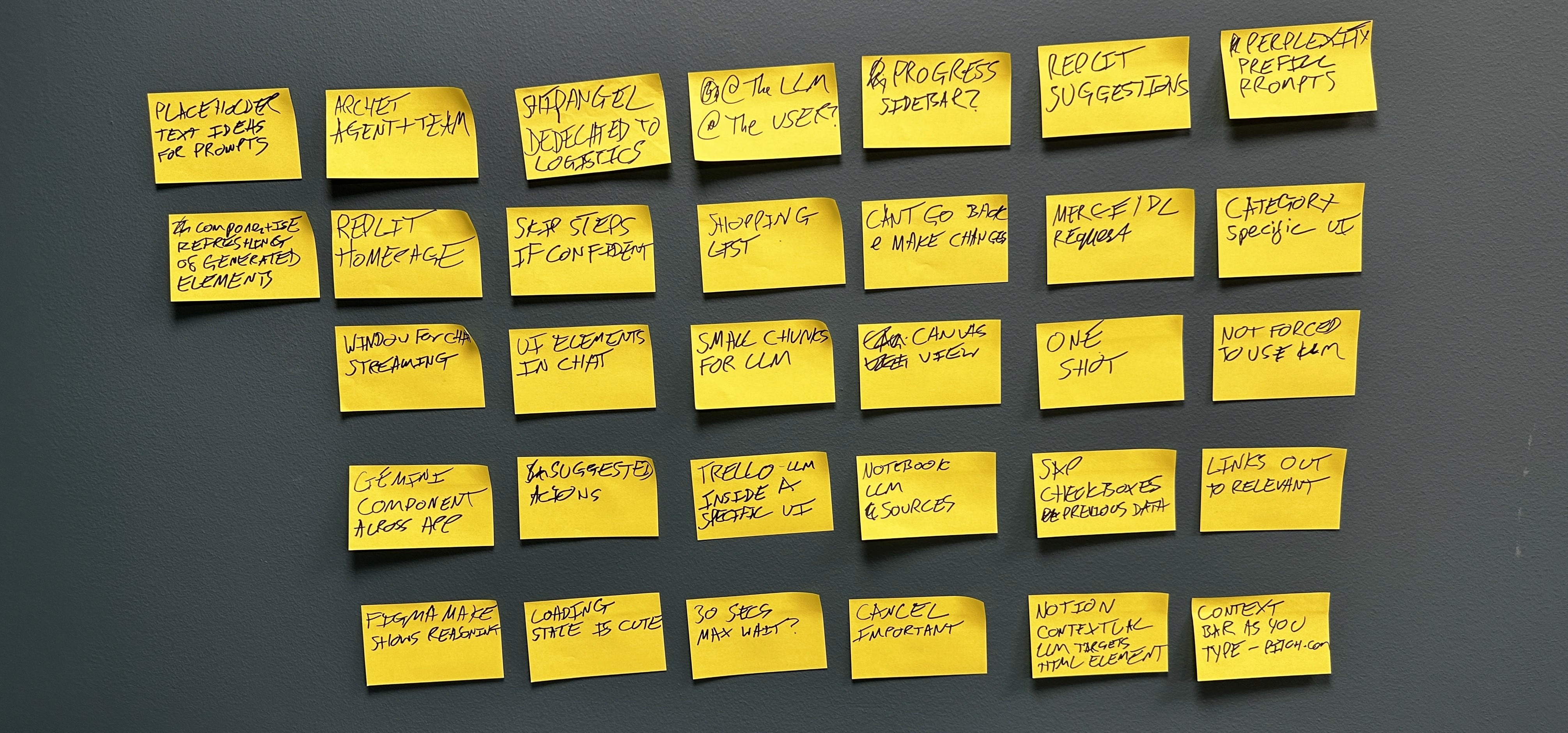
These postits show inspiration the team found on AI UX patterns during the workshop.
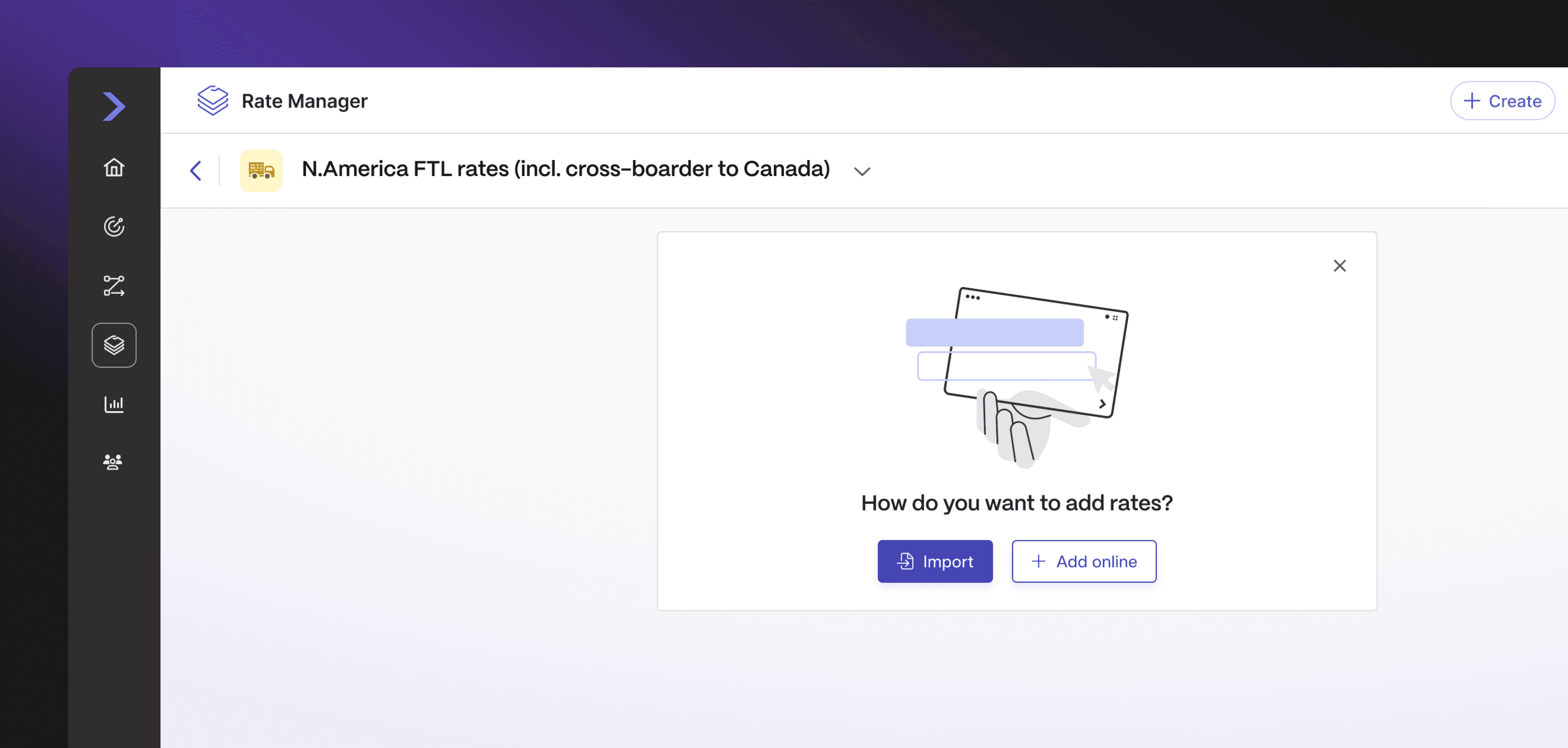
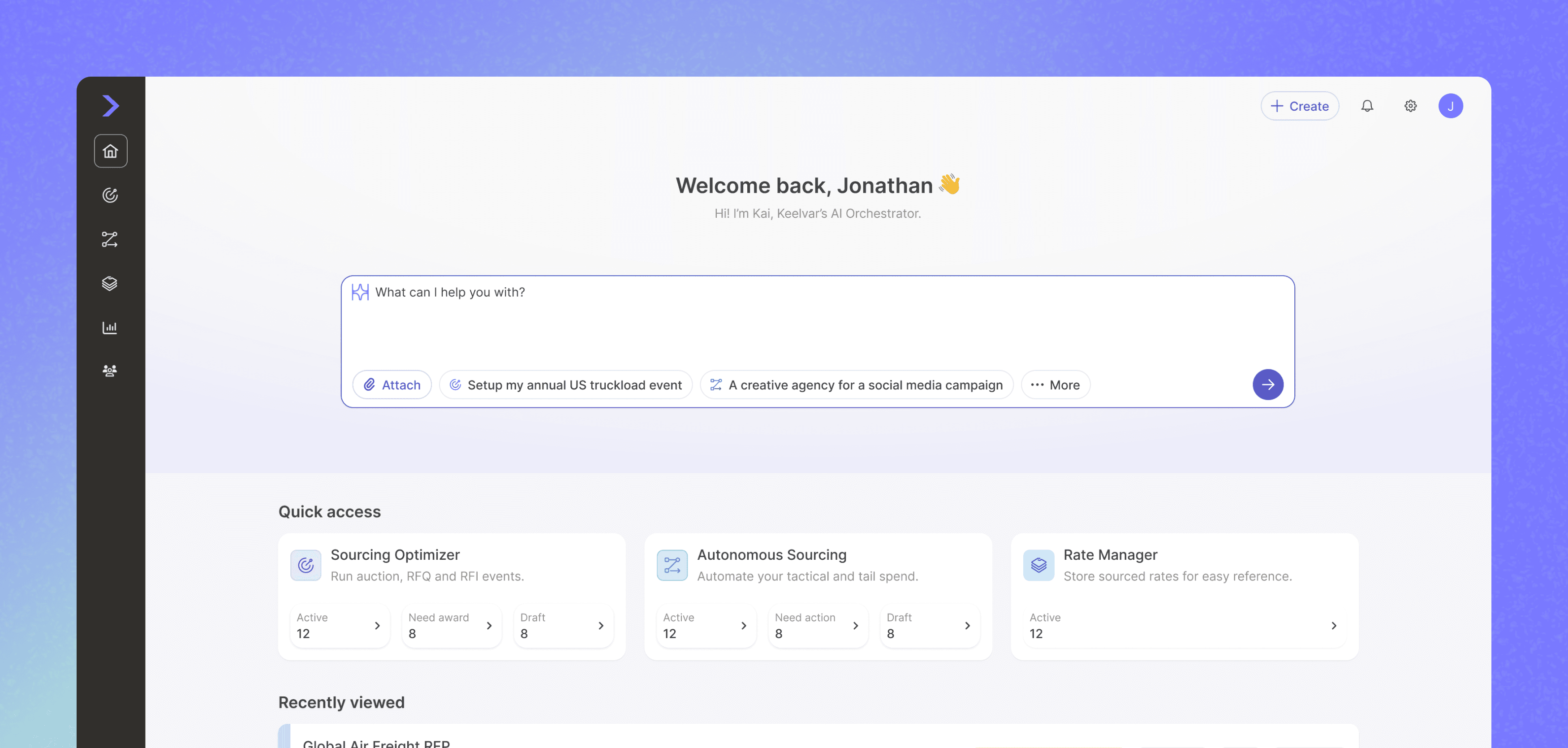
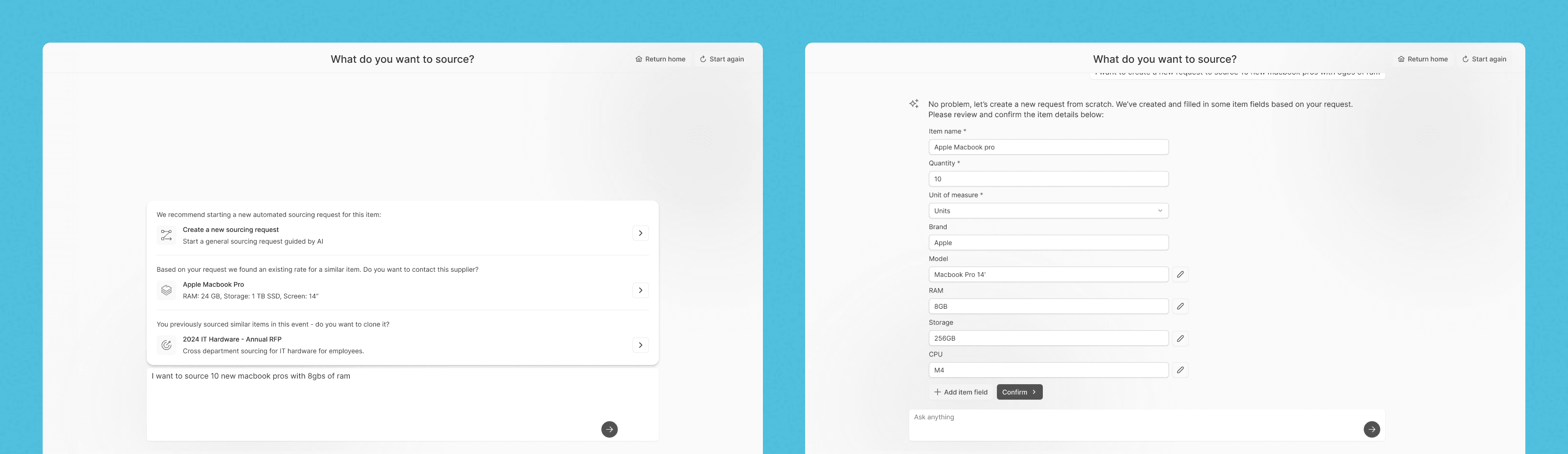
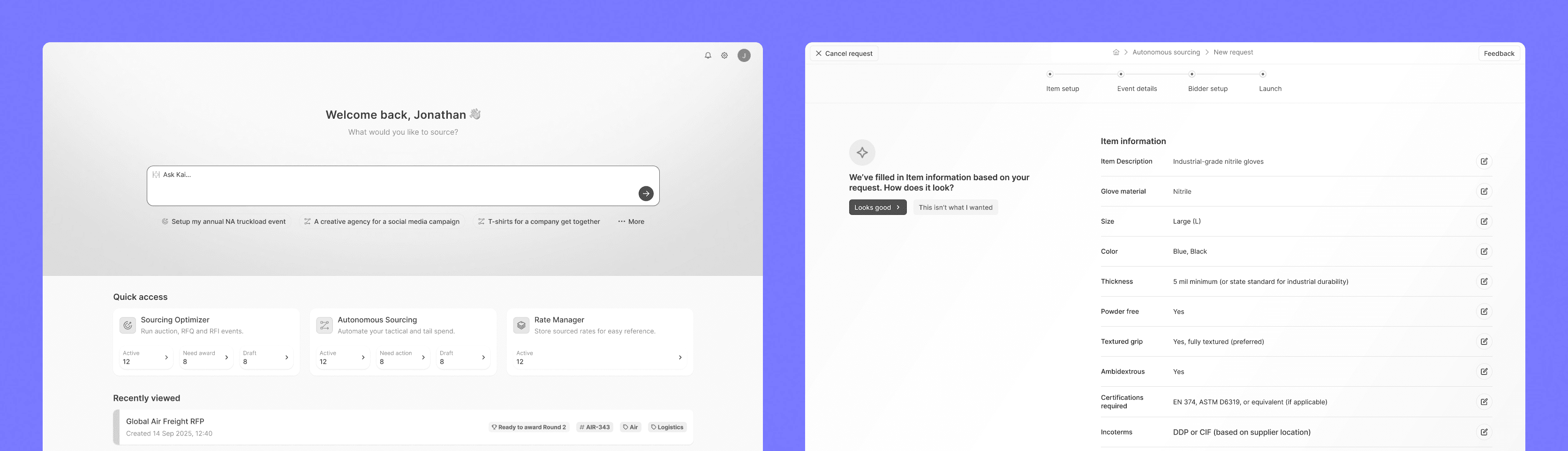
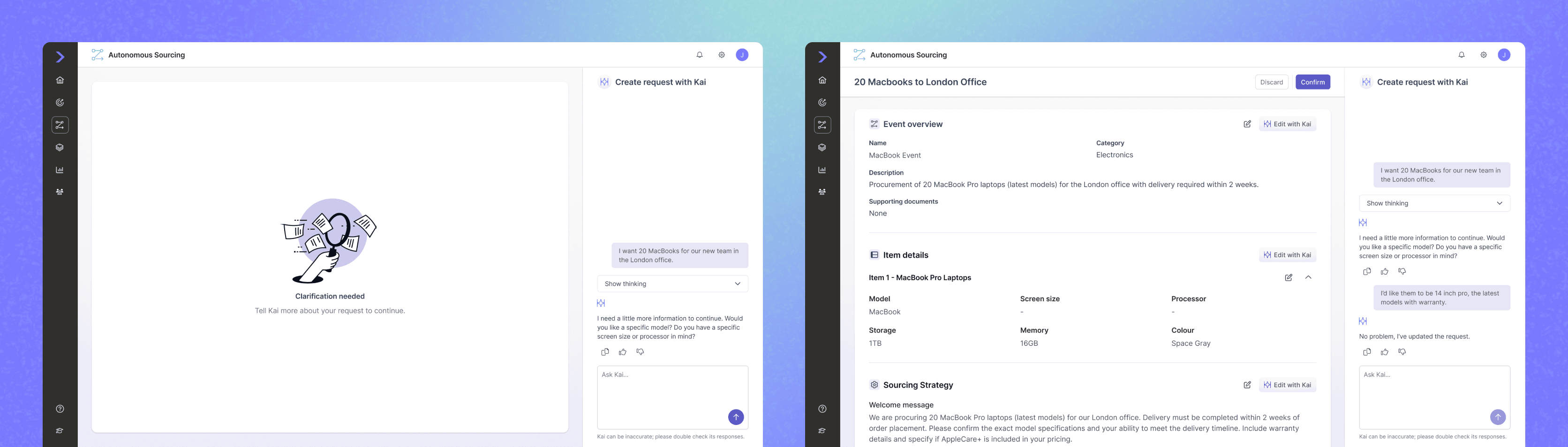
We evaluated several interaction models and converged on a "Canvas" approach — a split view separating AI output from chat input, while preserving both AI and manual editing. Building on existing page patterns meant we could move fast without rebuilding from scratch.
Design & Testing
I designed the UI within our existing design system, defined the end-to-end flow for "Kai" (Keelvar AI), and handed off to engineering before moving into validation.
13 user testing sessions surfaced one finding that reshaped the design: we expected users to find Kai's "thinking" messages — its step-by-step reasoning — to be noise. The opposite was true. Users wanted visibility into Kai's conclusions for transparency and trust. We kept the messages, housed in an accordion to keep the UI clean.
'This will really make it so nobody has to be trained on how to do anything. That's what it needs to get to to be super, super successful.'
Outcome
Early results are directionally strong: time-to-launch has reduced and drop-off is improving. With the product in early rollout, benchmarked numbers are still being gathered — but customer feedback signals the direction is right.
"Kai's capability to intelligently create RFQ events and templates amazed me — a significant differentiator from tools that only offer basic help bots." — Nordex
"The autonomous sourcing for unstructured data Kai offers is really compelling — exactly what we need." — PepsiCo
This work was created at & is property of Keelvar.
End-to-end design ownership.
UX research & user testing - validated ideas and identified areas for improvement before launch
UI Design - utilised existing patterns in our design system for speed and consistency.
01
02
03

04
see also